 Pinoy Gaming Network Where Pinoy Gamers Unite!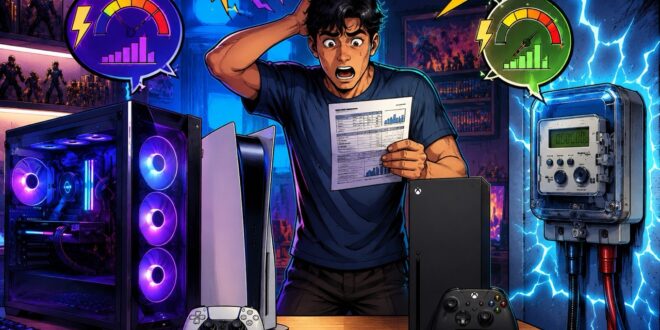

For many Filipino gamers, one of the biggest concerns before buying new hardware isn’t just the price of the device itself—it’s the monthly electric bill.
Maraming gamers ang naniniwala na ang gaming PC ay “malakas sa kuryente” habang mas tipid daw ang consoles tulad ng PlayStation 5 at Xbox Series X. But how big is the difference really?
To find out, we compared publicly available power consumption data from Sony and Microsoft with realistic gaming PC power estimates, then calculated the potential cost using Meralco’s published residential electricity rate of approximately ₱14.33 per kilowatt-hour (kWh) as of this writing.
Understanding Power Consumption
Before we start, it’s important to understand that power consumption is measured in watts (W).
A device that consumes 100 watts for 10 hours uses 1 kilowatt-hour (kWh) of electricity.
Your electric bill is based on kWh consumption, not watts alone.
How Much Power Does Each Platform Use?
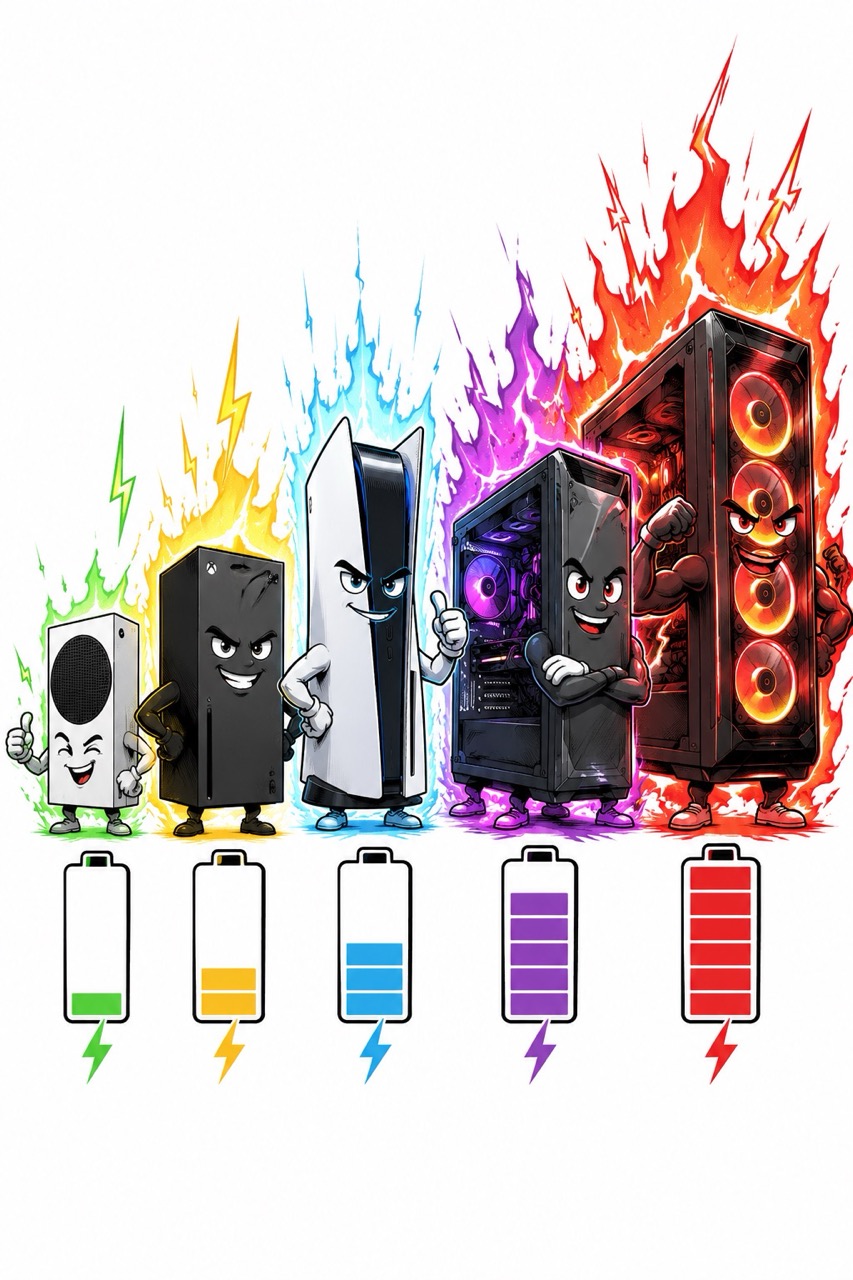
Based on official manufacturer disclosures and sustainability reports:
| Platform | Typical Gaming Power Draw |
|---|---|
| Xbox Series S | ~71W |
| Xbox Series X | ~150W |
| PlayStation 5 | ~216W |
| Mid-Range Gaming PC | ~350-450W |
| High-End Gaming PC | ~650W+ |
Sony reports that the PS5 typically consumes around 200 to 220 watts during active gameplay, while Microsoft’s sustainability data places the Xbox Series X at roughly 150 watts and the Xbox Series S at around 71 watts during gaming.
Gaming PCs are more difficult to measure because every system is different. A PC equipped with a modern mid-range graphics card may draw between 350 and 450 watts during gaming, while enthusiast-level systems can exceed 650 watts under heavy load.
What Does That Mean for Your Electric Bill?

Let’s assume you play for 4 hours per day, every day, for an entire month.
Xbox Series S
71W × 4 hours × 30 days = 8.52 kWh
Estimated monthly cost: ₱122
Xbox Series X
150W × 4 hours × 30 days = 18 kWh
Estimated monthly cost: ₱258
PlayStation 5
216W × 4 hours × 30 days = 25.92 kWh
Estimated monthly cost: ₱371
Mid-Range Gaming PC
400W × 4 hours × 30 days = 48 kWh
Estimated monthly cost: ₱688
High-End Gaming PC
650W × 4 hours × 30 days = 78 kWh
Estimated monthly cost: ₱1,118
The Results Might Surprise You
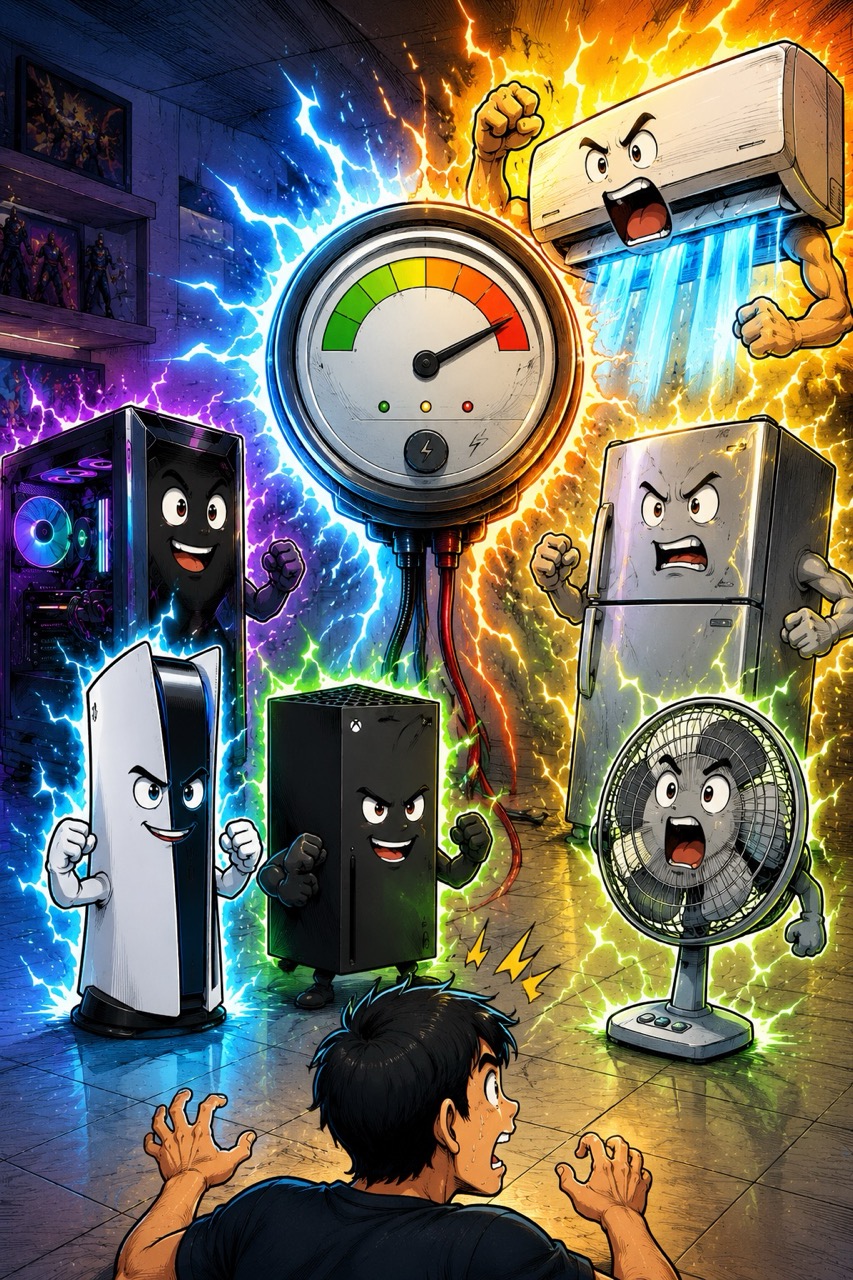
Looking at the numbers, even a PlayStation 5 used every day for four hours only adds around ₱371 per month to your electricity bill.
For many households, that’s less than the monthly cost of a streaming subscription.
Meanwhile, a mid-range gaming PC may cost nearly double that amount, while a high-end enthusiast rig can exceed ₱1,000 monthly depending on usage.
Pero kahit ganoon, hindi pa rin ito kasing laki ng konsumo ng ibang appliances sa bahay.
A typical air conditioner can consume between 700W and 2,000W depending on capacity and settings, meaning it can easily cost more to operate than a gaming PC if used regularly.
Should Electricity Cost Affect Your Buying Decision?

For most gamers, probably not.
If your primary goal is gaming at the lowest electricity cost, the Xbox Series S remains one of the most power-efficient options available today.
If you prefer higher graphical settings, productivity capabilities, mod support, and upgrade flexibility, the additional electricity cost of a gaming PC may be worth it.
Sa madaling salita, oo, mas mataas ang konsumo ng gaming PC kumpara sa consoles. Pero hindi rin ito ang “electricity monster” na madalas ipinapalabas ng ilan.
The real difference usually comes down to how many hours you play—and whether you’re running a budget gaming setup or a flagship gaming machine packed with high-end components.
Final Thoughts
Gaming hardware does consume electricity, but the actual cost is often lower than many people expect.
For Filipino gamers, understanding the numbers can help set realistic expectations and remove some of the myths surrounding gaming power consumption.
Whether you’re gaming on a PS5, Xbox Series X, or a powerful custom-built PC, the best choice is still the platform that fits your budget, gaming habits, and long-term needs.


