 Pinoy Gaming Network Where Pinoy Gamers Unite!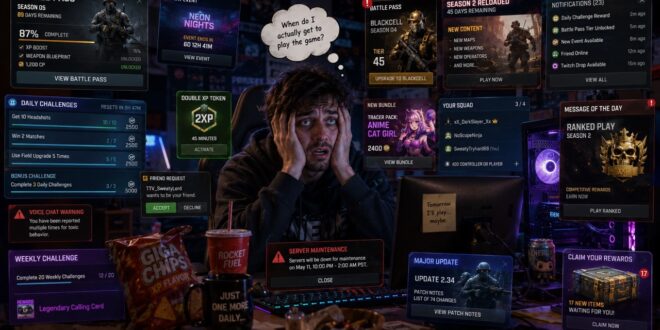

There was a time when battle passes actually felt exciting.
Back when Fortnite helped popularize the system, it felt rewarding. You bought a seasonal pass, unlocked cosmetics naturally while playing, and somehow convinced yourself na “sulit naman.”
Then suddenly every multiplayer game started having one.
Now?
Parang bawat laro may sariling attendance sheet.
From Call of Duty: Warzone to Valorant, Overwatch 2, mobile games, fighting games, and even some survival titles, almost every modern online game now wants players logging in daily to complete missions, grind XP, and unlock limited-time rewards.
And honestly?
A lot of gamers are getting tired.
The “Second Job” Problem
Modern live-service games are designed around engagement.
Daily missions.
Weekly objectives.
Limited-time cosmetics.
XP boosts.
Seasonal rewards.
Event currencies.
Fear of missing out.
At first, these systems feel fun because they reward active players. But over time, many gamers start realizing that they’re no longer playing because they genuinely want to.
They’re playing because ayaw nilang masayang yung battle pass na binayaran nila.
And when you’re trying to manage multiple battle passes at the same time, gaming slowly starts feeling less like entertainment and more like unpaid overtime.
The pressure isn’t just anecdotal either.
A 2025 gaming industry report by Bain & Company found that 64% of players said intrusive monetization and engagement systems negatively affected their gaming experience.
Which honestly makes sense.
Kapag may battle pass ka sa limang games sabay-sabay, parang may monthly project deadlines ka na rin.
Even Big Games Are Adjusting
Interestingly, some developers are starting to notice battle pass fatigue.
When Halo Infinite launched its early seasonal model, many players criticized how slow progression felt despite the game offering non-expiring battle passes.
Meanwhile, Diablo IV also faced discussions from players who felt repetitive seasonal grinding became exhausting over time.
On the other hand, Helldivers 2 received praise partly because its “Warbond” system reduced some of the usual FOMO pressure found in traditional battle passes. Players appreciated that rewards did not instantly disappear after a season ended.
And honestly, that’s probably where the industry is heading.
Not because players hate progression systems —
but because players are tired of feeling pressured every single day.
Too Many Games Want Your Attention
The modern gaming industry has become incredibly crowded.
According to 2025 industry estimates, there are now around 3.55 billion gamers worldwide. That also means thousands of games are competing for player attention every day.
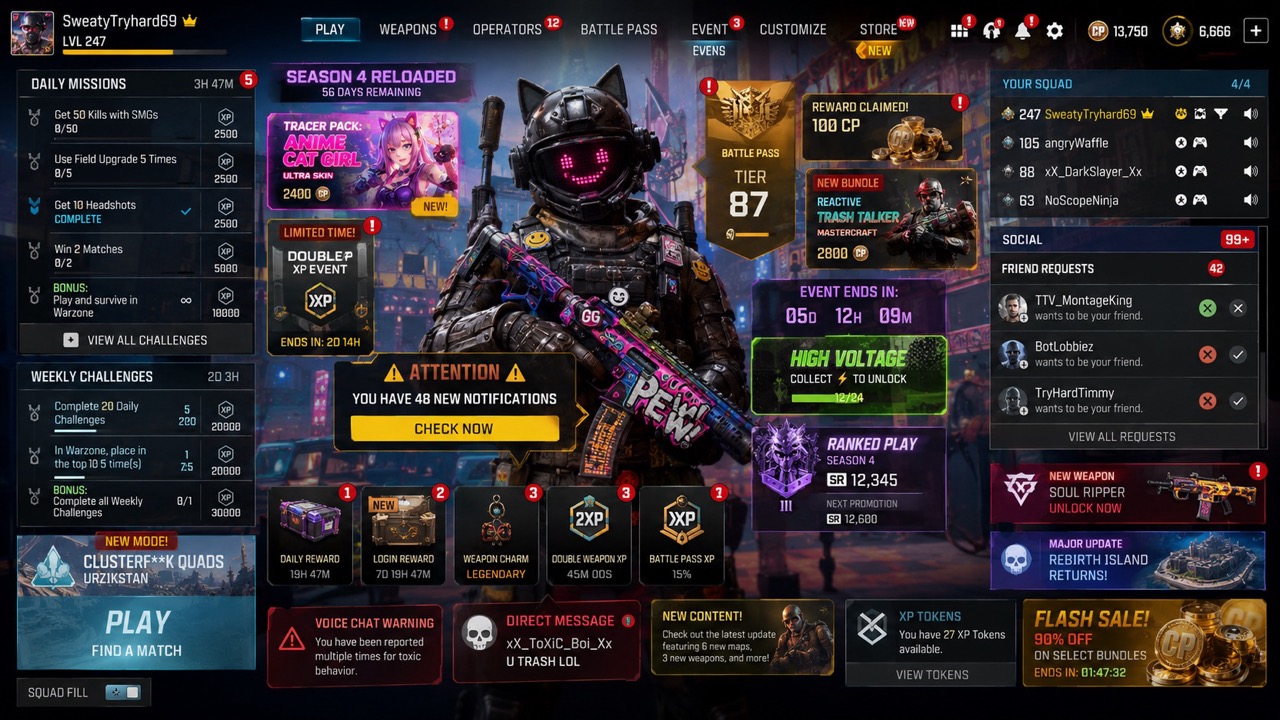
And every major live-service game wants to become your “main game.”
One week may bagong season sa Fortnite.
Then may limited-time event sa Warzone.
Then may exclusive skin bundle sa Valorant.
Then another game suddenly announces double XP weekend.
At some point, your relaxing hobby starts looking like calendar management.
And players are starting to push back against that.
Gamers Are Choosing Freedom Again
One noticeable trend in 2026 is that many gamers are returning to experiences that allow them to play at their own pace.
Single-player RPGs.
Cozy games.
Sandbox games.
Offline adventures.
Short indie titles.
Games where you can disappear for two weeks and walang mangyayaring punishment pagbalik mo.
That freedom is becoming valuable again.
A growing number of players are realizing that they no longer want gaming to dictate their schedule every single day.
And honestly? Valid naman.
Battle Pass Fatigue Is Real
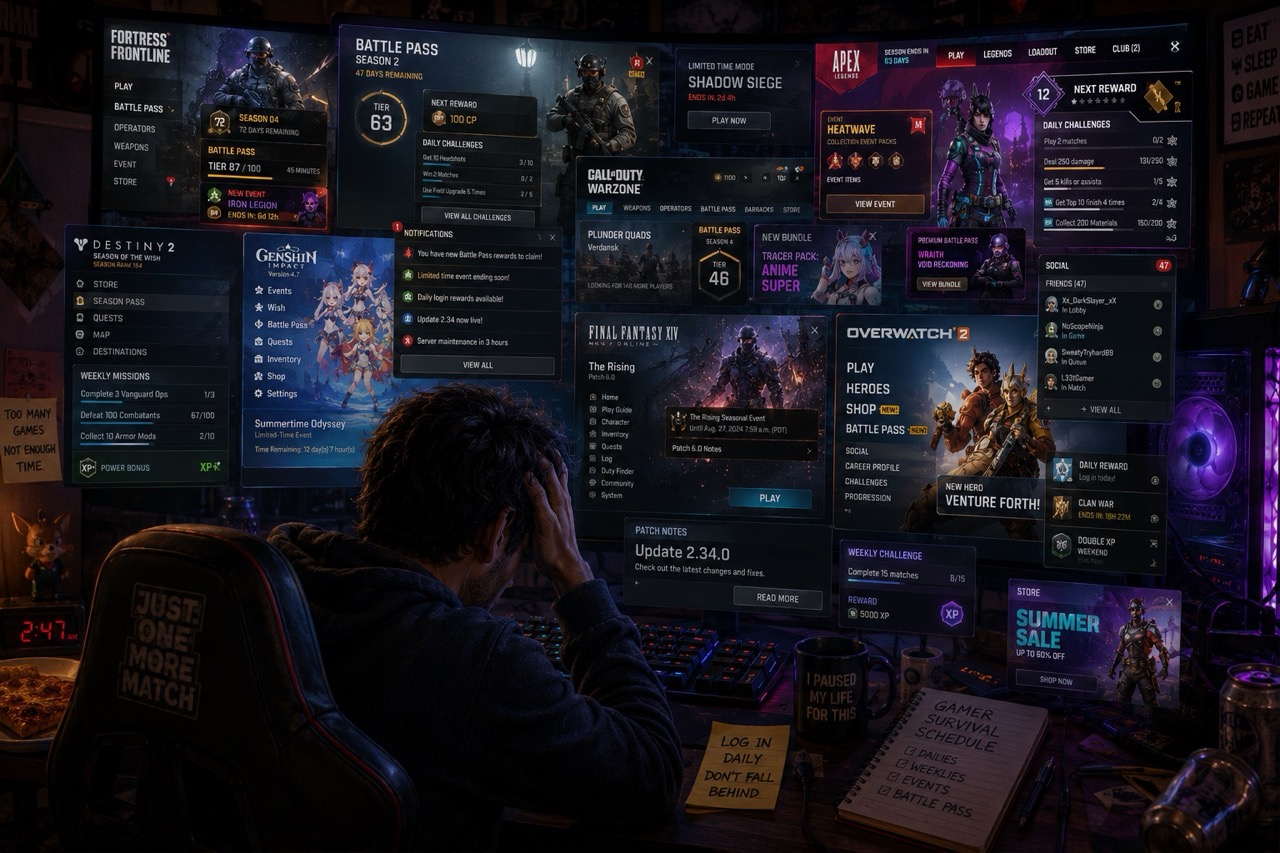
The issue is not necessarily battle passes themselves.
The issue is oversaturation.
Almost every multiplayer game now includes:
- seasonal progression
- timed cosmetics
- event currencies
- premium reward tracks
- limited-time missions
Eventually, players stop feeling excited.
Instead of:
“Nice, new season!”
It becomes:
“Bro… another battle pass?”
Even gaming communities have started openly discussing burnout, gaming fatigue, and FOMO exhaustion more frequently than before.
Because after work, school, deadlines, traffic, and real-life stress, not everyone wants to spend their free time worrying whether they can still unlock Level 87 before the season ends.
Gaming Should Still Feel Fun
At the end of the day, players are not rejecting multiplayer gaming.
They’re rejecting the feeling that gaming constantly demands their attention.
People still love progression systems.
People still enjoy cosmetics.
People still like unlocking rewards.
But many gamers now want those systems to feel optional — not mandatory.
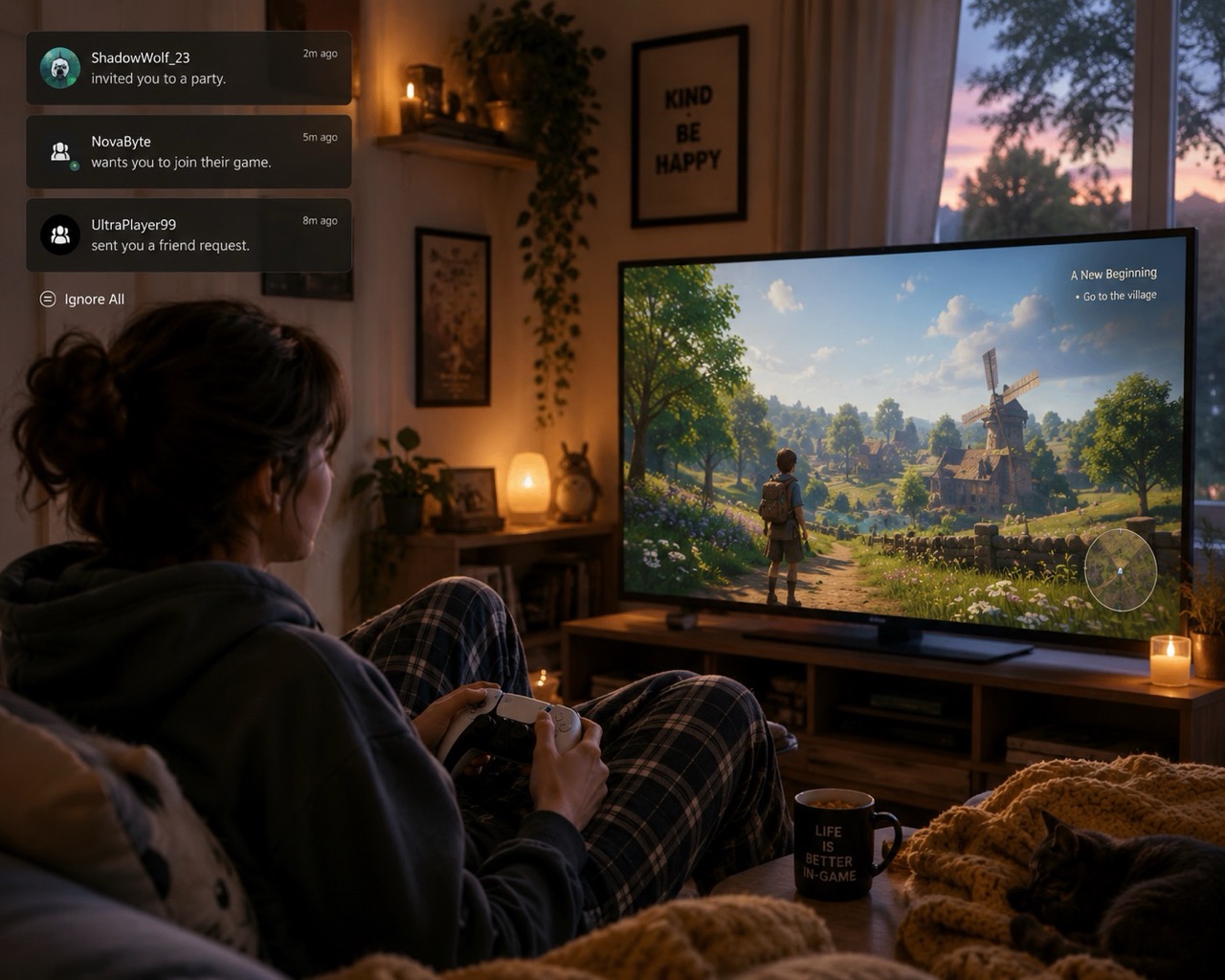
Because sometimes, after a long stressful day, you just want to log in, play a few matches, maybe lose peacefully, then leave without another notification reminding you to finish six weekly missions before tomorrow.
And honestly?
That sounds healthier for gaming overall.