


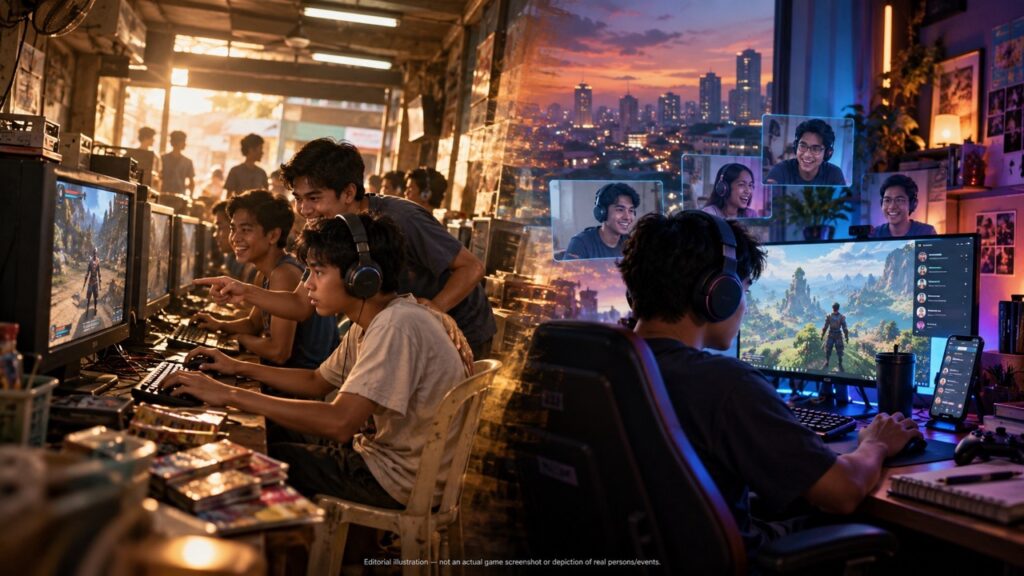
TL;DR: In 2008, PGN said Filipino youth played online games for companionship, out of boredom, and mostly for refuge. Eighteen years later, the research says we were half right. Gaming with your barkada is mostly fine, but gaming to escape is the real red flag. This year, games also took the blame for school violence, and gambling apps kept borrowing the word “gaming.” Panahon na para ituwid ang usapan.
On July 2, 2008, we published a short piece called “Why the Filipino Youth is Hooked to Online Gaming.” It opened with a student whose father scolded him for playing an online game when he should have been in class. His defense was simple: the game was where his real friends were. They shared his interests, even though he had never met them in person. Aminin na natin, marami sa atin ang ganyan din.
That was peak comshop era: Ragnarok, RF Online, MU, prepaid cards, and a whole generation sneaking out for “isang oras na lang.” The article asked whether the pull was companionship, boredom, or refuge, and it concluded that refuge mattered most.
Eighteen years later, we decided to reread our own work. Hindi na kami bata, and neither is the research.
The comshop moved into our pockets

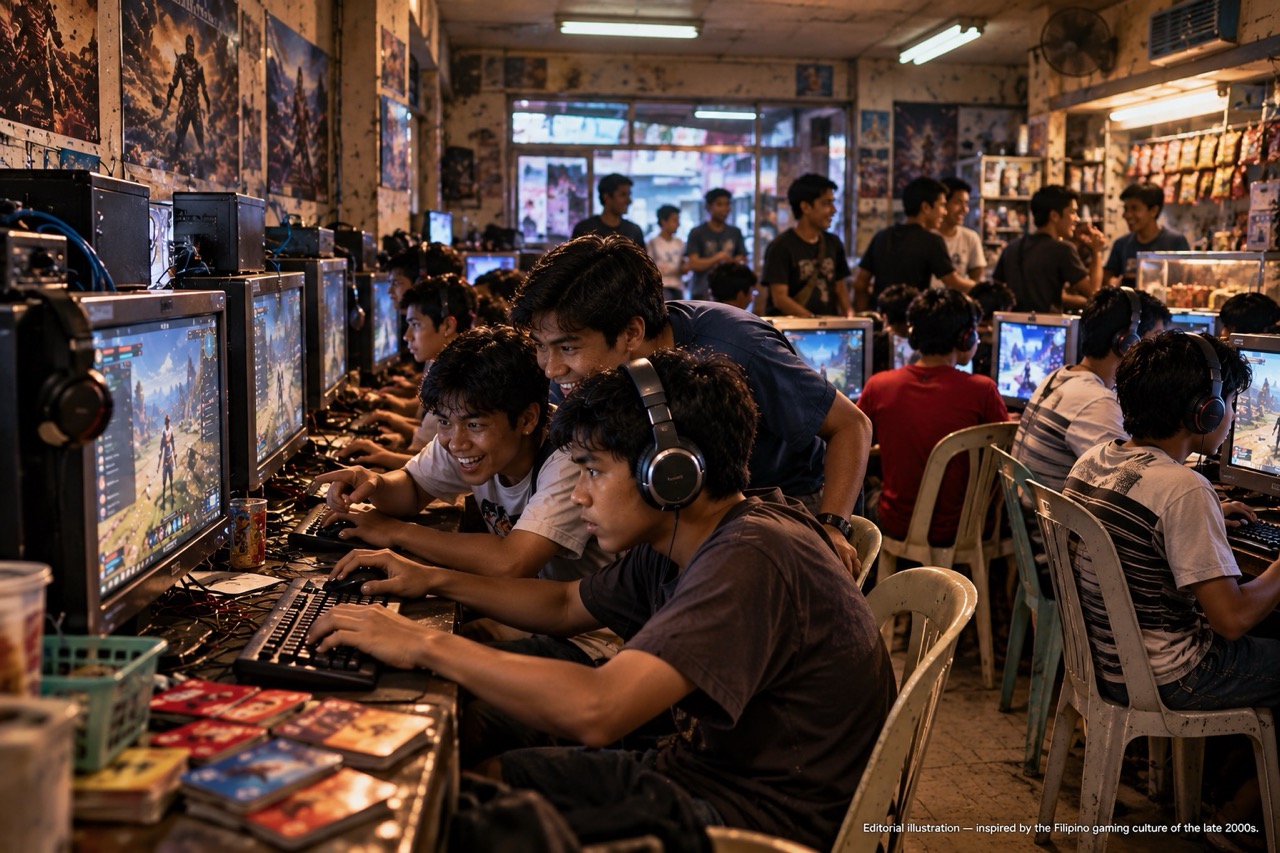
Gaming today happens on a scale that 2008 couldn’t have imagined. These are the numbers we’ll keep coming back to:
| Stat | Number | Source |
|---|---|---|
| Filipinos who are active internet users | 83.8%, over 98 million people | Digital 2026 |
| Filipino internet users aged 16+ who play video games | 96.6%, highest in the world | Digital 2025 |
| Pasay City public high schoolers (14–18) who met IGD criteria | 1.1% | Health Sciences Journal, 2023 |
| Same students with moderate depression / high anxiety | 67% / 89.3% | Health Sciences Journal, 2023 |
| School-going Filipinos aged 11–17 not active enough | 93.4% (2016 data) | Lancet Child & Adolescent Health |
| Global prevalence of gaming disorder | 2.96% | Stevens et al., corrected |
| Link between play frequency and in-game spending among Filipino teens | r = 0.67 (strong) | Cognizance Journal, 2025 |
Halos lahat ng Pinoy online, naglalaro.
The student who got caught skipping class now has his story written into national policy. DepEd Order No. 006, s. 2026 bans gadget use during class hours and names online games, social media, content creation, and vlogging specifically, with exceptions for learning and emergencies. A June 30 memo told schools to enforce it strictly. Ang dating sermon ni Papa, DepEd memo na ngayon.
What we got right: the barkada was never the problem
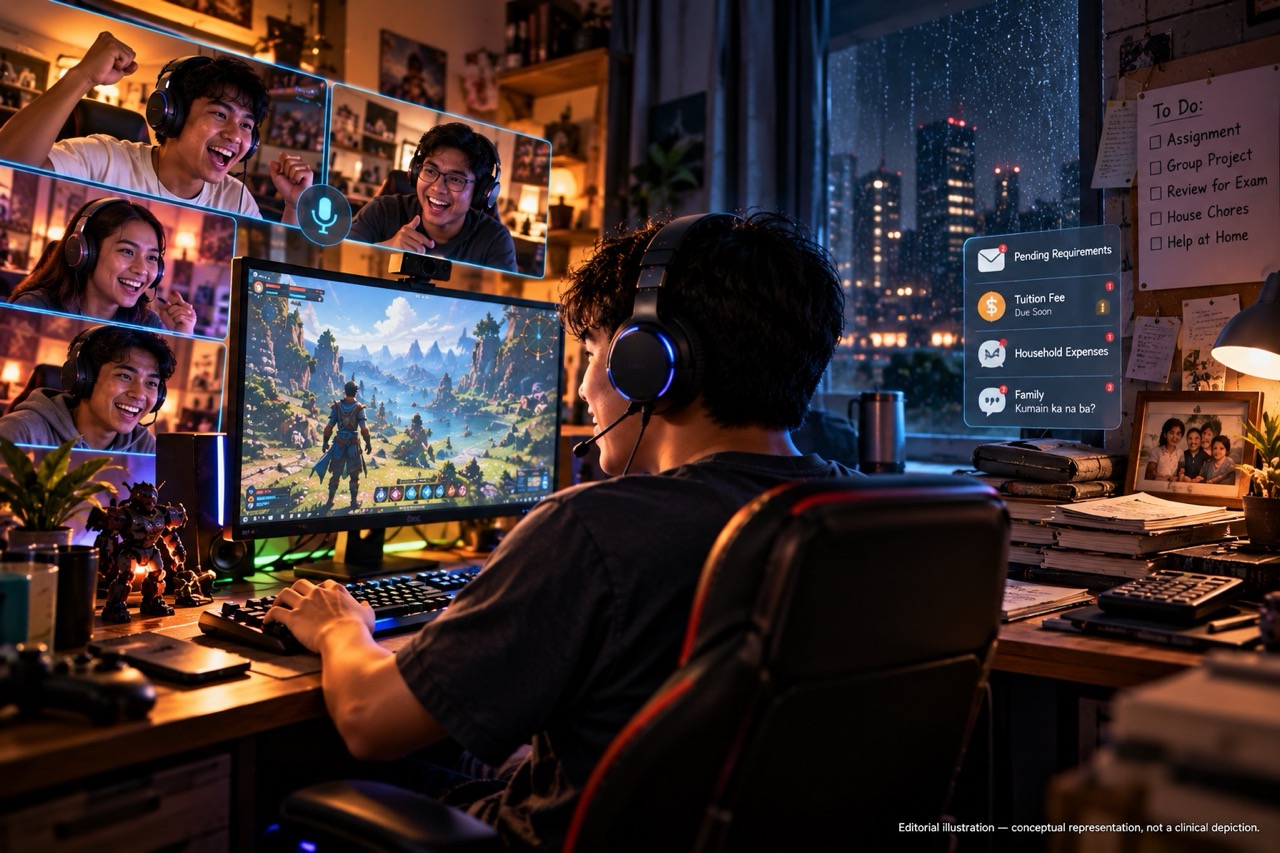
Of the three reasons, companionship has held up best. A 2022 meta-analysis in JMIR Mental Health measured how strongly different gaming motivations are tied to internet gaming disorder (IGD):
| Why people play | Link to IGD (r) |
|---|---|
| Escapism (playing to get away from real life) | 0.40, the strongest |
| Achievement (ranks, grinding, winning) | 0.32 |
| Immersion (story, fantasy worlds) | 0.22 |
| Social (playing with friends) | 0.20, the weakest |
Social play comes in last. Walang masama sa pag-push ng rank sa ML with your tropa.
There’s also evidence that gaming can be good for you. During the pandemic, Japanese retailers sold scarce consoles by lottery, and researchers used that as a natural experiment. Lottery winners who got a Nintendo Switch showed a 0.60 standard deviation improvement in mental well-being, and PS5 winners showed 0.12. Younger players benefited more from the Switch. The benefit had a limit, though: it started to shrink for people who played more than about three hours a day.
That matches how the 2008 piece signed off: “there is no greater MMORPG than Life.” Balance lang talaga.
What aged badly
We’d write two parts of the original very differently today.
The first is the line calling today’s youth “considerably weaker than the earlier generations.” Hindi fair ‘yan. Go back to the Pasay numbers: barely 1 in 100 students met the criteria for gaming disorder, but nearly 9 in 10 showed high anxiety. Those numbers don’t describe a generation addicted to games. They describe a generation carrying a lot, and games are often where they set it down for a while.
The second is the health claim. The original linked gaming to juvenile diabetes. That term usually means type 1 diabetes, an autoimmune condition that screen time doesn’t cause. The real health issue is the inactivity number in the table, and phones aren’t the only culprit: the researchers also cited the lack of public spaces and poor urban and transport planning. Mahirap mag-tumbang preso kung wala nang bakanteng lote.
The refuge problem
This is the uncomfortable part. In 2008, we named refuge as the main reason and treated it as harmless. One player in the piece described the game as the one place without disasters, somewhere to briefly forget the family members he had lost in a typhoon.
We understand that feeling better now, not worse. But look at the motivation table again: escapism is the motive most strongly tied to IGD, with double the link that social play has. A 2022 systematic review of 26 studies found that escapism and avoidance coping both predict problematic gaming. They also connect it to issues like loneliness, anxiety, and low self-esteem.
Most gamers are fine; the global rate of gaming disorder is under 3%. Logging in after a rough week is normal. The red flag is when the game becomes the only place you feel okay.
When the refuge becomes the scapegoat

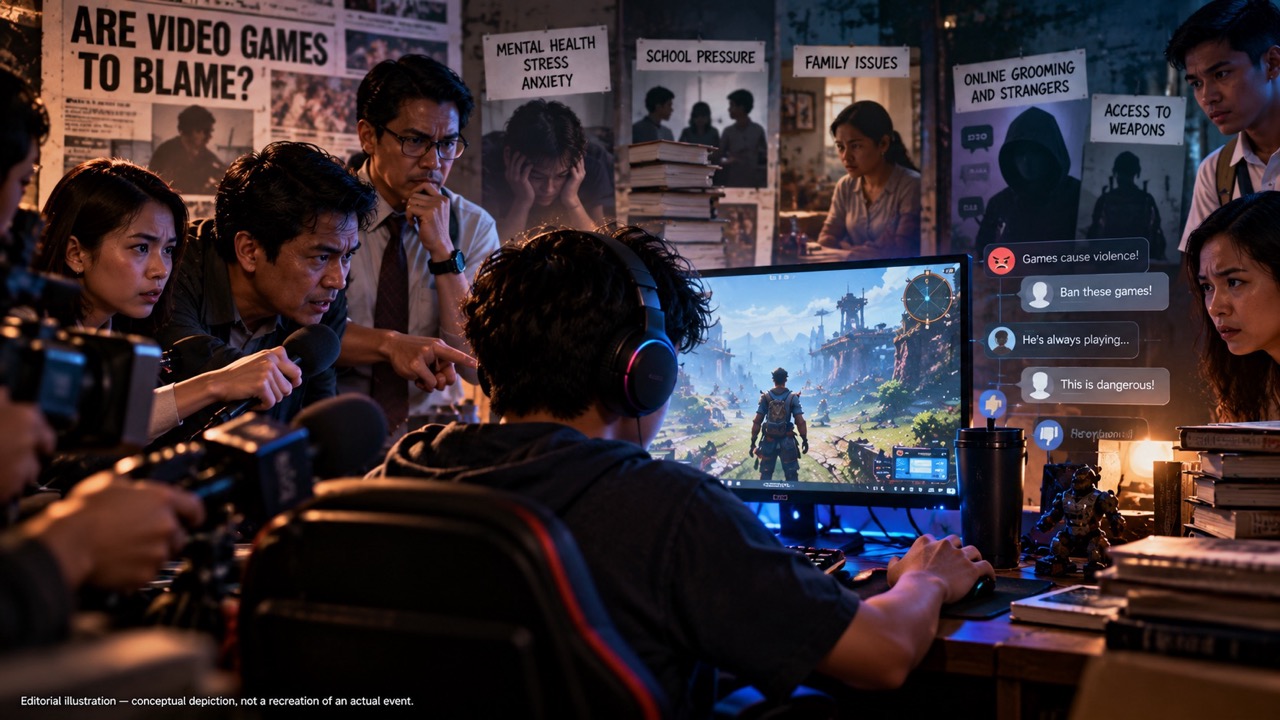
This year, the “games are dangerous” argument moved from the dinner table to the Senate floor. On June 22, two students aged 14 and 15 opened fire at San Jose National High School in Tacloban City. Three students were killed and more than a dozen were wounded. Our hearts are still with those families.
Police first found that one of the suspects regularly played GoreBox, a violent game rated 18+. Investigators later told senators that both minors played it often. The government temporarily blocked the game, and Google and Steam removed it from their Philippine storefronts by June 30. The DILG secretary said GoreBox should be banned permanently and asked Congress to study banning violent games altogether. President Marcos later said that if a game or type of game is shown to desensitize children to violence, the government will ban it. In Dagupan City, the local government ordered all pisonet shops closed, saying they could hurt students’ education and expose kids to danger. Then on August 18, a shooting at a junior high school in Zamboanga City left a student dead, and the ban talk came back.
Ilang beses na ba nating napanood ang pelikulang ‘to? In 2008, a dad blamed the game. In 2026, the government did. The research hasn’t changed, though. A University of the Philippines associate professor said most studies, across all game types, find no meaningful relationship between gaming and aggression. Where a link does show up, it usually traces back to personal or social conditions rather than the game. The Psychological Association of the Philippines said school violence can’t be explained by any single factor. Even the authorities told senators there’s no evidence that the game directly caused the shooting.
None of that means walang problema. Two parts of this story deserve real attention.
First, a 14-year-old shouldn’t have been playing an 18+ gore game at all. That’s a failure of age ratings and enforcement, not a reason to ban gaming. Sen. Bam Aquino has rejected a blanket ban. He wants strict age restrictions on mature-rated games, like the rules for movies and TV, with penalties for developers and parents who let minors get access. Senate President Gatchalian has filed a bill that would put video and online games under the MTRCB and ban selling Adults Only games to minors. The MTRCB itself has said before that it can’t take on reviewing games.
Second, the bigger danger may be who’s talking to kids in-game, not what’s on the screen. At the Senate hearings, Sen. Risa Hontiveros pointed to a suspected adult groomer who may have influenced the two minors. She also flagged possible links to “764,” an online extremist network, and her office sent its findings to the NBI for validation. The group reportedly looks for targets on Roblox and Minecraft, not just GoreBox, mga larong hindi naman violent. As Hontiveros herself put it: “Hindi games o gaming community ang kalaban.”
Closing every pisonet doesn’t solve either problem. For many kids, the pisonet is the only computer they can use for schoolwork, and for a lot of us, the comshop is where we found our first barkada outside school. A ban won’t touch the anxiety, the predators, or the question of how two minors got hold of guns. It only takes away the room.
The “sayang ang pera” debate leveled up
The 2008 writer’s hardest argument was with his dad, who asked why anyone would spend thousands of pesos on pixels they couldn’t even own. Noon, prepaid cards lang ‘yan. Ngayon, it’s battle passes, skins, and gacha pulls, each one a tap away sa e-wallet.
The 2025 study in our first table found that Filipino teens who play more also spend more. Peer influence, the anticipation of rewards, and emotional gratification drove the purchases. Loot boxes are the bigger worry. A 2019 survey of 1,155 teens aged 16 to 18 found a moderate-to-large link between loot box spending and problem gambling.
Gaming is not gambling. Stop calling it that.
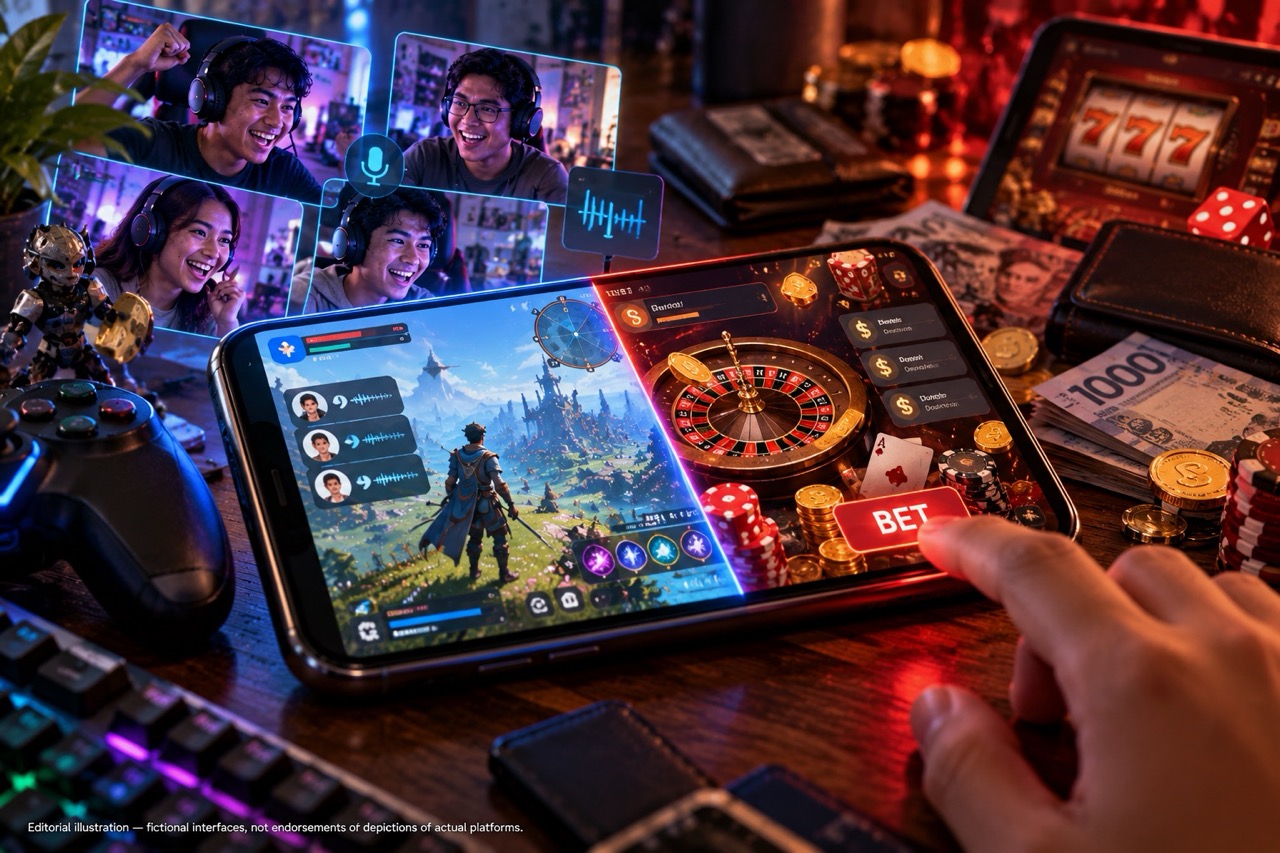
That brings us to a comment we never replied to. In March 2009, a reader named April asked us whether online game addiction could lead someone into gambling.
One of the loudest voices on this question today is Carlo Ople, an entrepreneur and content creator whose career started with a gaming blog he wrote while working a corporate job. He’s been loudly saying no to gambling ads, which earned him a well-deserved “sana all” from netizens on Reddit. He has called for a complete ban on influencers and celebrities promoting gambling. In July, he backed Sen. Escudero’s SB 2347, arguing that online gambling apps are deliberately built to be addictive. His podcast also hosted a former online gambling industry insider, who explained the industry’s predatory marketing, from celebrity endorsements to influencer campaigns.
As a gaming site, we’d add one more demand: stop letting gambling call itself gaming. The state gambling regulator is the Philippine Amusement and Gaming Corporation, and an online bingo app became the women’s volleyball league’s “official gaming partner.” People defending licensed operators describe them as regulated “gaming platforms.” Even a state news agency report on PAGCOR’s income called online gambling “online gaming.” So when a headline says “online gaming addiction,” a worried parent can’t tell whether it means ML or an online casino. Gamers absorb the stigma, and gambling hides behind our hobby’s friendlier name.
The government is finally paying attention. The Senate has been debating whether to ban or regulate online gambling since 2025. In February 2026, PAGCOR tightened its KYC rules and advertising controls. Since July, lawmakers have filed bills in both the Senate and the House to ban gambling ads, and one representative blamed livestream ads, shared bonus codes, and influencers for drawing young people in.
So, April, sorry it took 17 years. Gaming doesn’t automatically turn anyone into a gambler. But some game monetization borrows from casino design, the casinos borrow our vocabulary, and both now live on the same phone.
12 months that put gaming on trial
| When | What happened |
|---|---|
| Aug 2025 | The Senate opens an inquiry into whether to ban or regulate online gambling |
| Feb 2026 | PAGCOR announces stricter KYC and advertising rules |
| Mar 24, 2026 | DepEd issues DO 006, banning gadgets (including online games) during class hours |
| Jun 22, 2026 | Tacloban school shooting; the suspects reportedly played GoreBox |
| Late Jun 2026 | GoreBox is pulled from Google Play and Steam in the Philippines; Dagupan City orders its pisonet shops closed |
| Jul 2026 | President Marcos vows to ban violent games if they are shown to desensitize kids; Sen. Escudero files SB 2347 against gambling ads |
| Aug 2026 | Zamboanga City school shooting; Sen. Aquino pushes age limits instead of a ban |
| Sep 2026 | The Senate approves the Sagip Bata Act against online grooming and the Comprehensive School Safety Act; a House bill seeks to ban online gambling ads and endorsements |
The better question for 2026
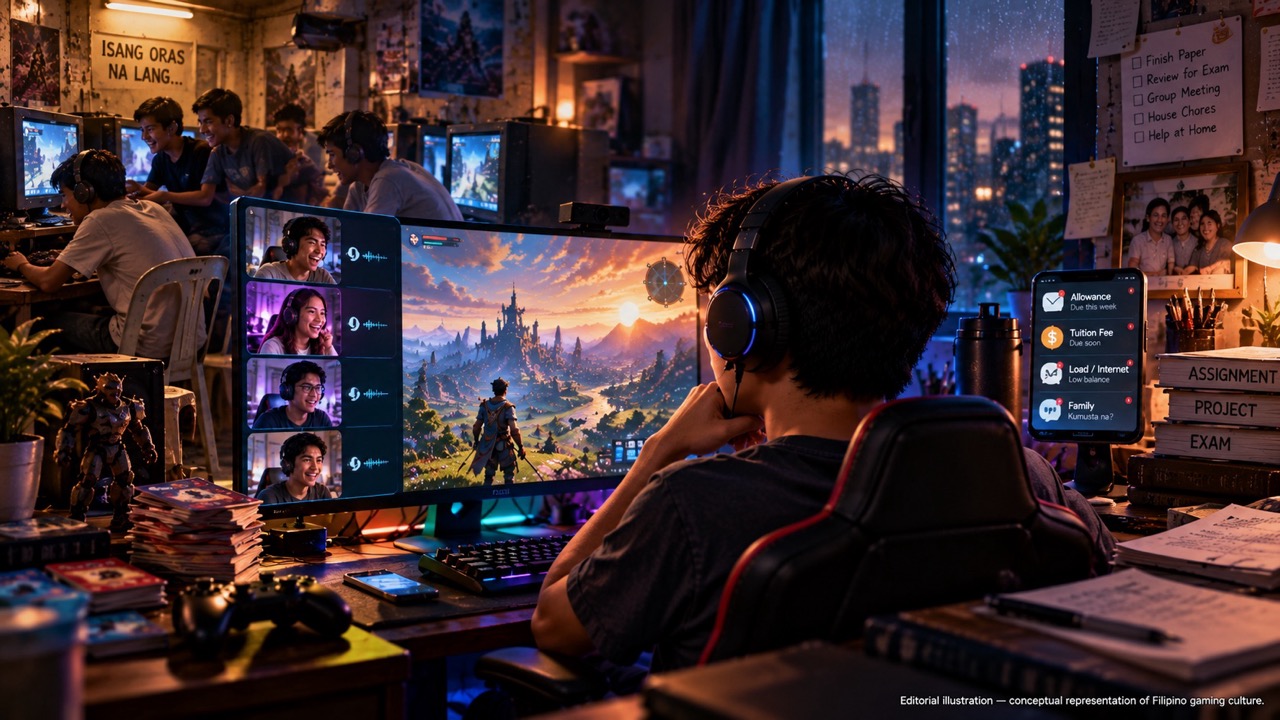
In 2008, we asked why the youth were hooked. In 2026, we’d ask three different questions: what are they playing to get away from, who’s talking to them while they play, and who profits when they can’t log off?
Gaming gave a lot of us our first real barkada outside of school, and that part is worth protecting. The stress, the predators, the spending, and the casino ads deserve the same honest look this site tried to give them 18 years ago. And the next time a tragedy happens, we should push for answers that actually protect kids, even when banning a game would be easier.
And to Lix Tetrax, who asked back in 2008 why the photo wasn’t of a Filipino: this time, it is. 😄
So, what was gaming for you back then, and what is it for you now? Sound off sa comments.