“GG Pre, Laro Na!” — 15 Pinoy Gaming Slang Terms na Dapat Mong Malaman
Jerico Vilog
If you’ve ever played a game with Pinoy teammates, you already know — we have our own language. It’s part English, part Filipino, part pure chaos, and 100% iconic. Here are 15 Pinoy gaming slang terms you need to know, pre.
Whether you’re grinding ranked in Mobile Legends, fragging in Valorant, or just vibing in a casual lobby, the Pinoy gaming community has developed its own vocabulary over the years. Some of it comes from Filipino culture, some from internet slang, and some — honestly — we have no idea where it started. But it stuck, and now it’s everywhere.
1. GG / GG EZ
Type: Universal
The most universal term in gaming — but here’s something most people don’t know: Pinoy gamers may have had a head start on this one. Back in the early 2000s, Ragnarok Online ruled every internet shop in the Philippines. Inside the game, typing /gg triggered a character emote, and players quickly adopted it as shorthand in chat. Long before “GG” became a global esports staple, thousands of Pinoy gamers were already typing it in Prontera, Payon, and Morroc — making it one of the earliest pieces of gaming slang to go mainstream in PH gaming culture.
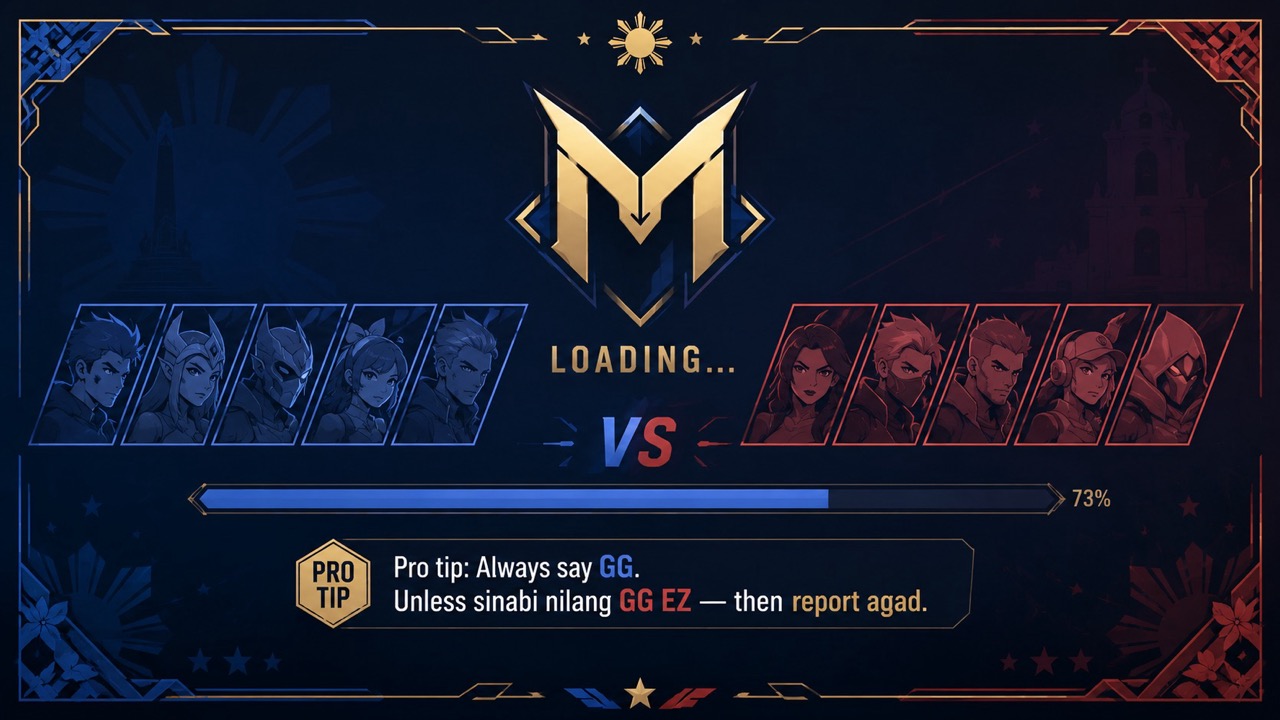
Today, “GG” at the end of a match is standard sportsmanship — the gaming equivalent of a handshake. But “GG EZ”? That’s a completely different energy, pre. It means you’re rubbing the win in the enemy’s faces, and in Pinoy lobbies, that’s a one-way ticket to the report button.
In-game: “GG sana lahat, but yung AFK sa mid? Hindi siya kasama.”
2. Pre / Brod
Type: Social
Short for “pare” — it’s how Pinoy gamers address literally everyone, whether you’re a random in a public lobby or a teammate you’ve known for years. There’s no formal introduction needed. The moment you queue together, you’re already “pre.” It’s one of the most endearing parts of Pinoy gaming culture — instant camaraderie, no questions asked.
Discord: “Pre, mag-rank tayo tomorrow ha? Solo Q muna ako ngayon, toxic yung lahat dito.”
3. Lodi
Type: Praise
“Lodi” is “idol” spelled backwards — classic Pinoy wordplay. It’s used to hype up someone who just pulled off an impressive play, clutched a round, or simply carried the whole team on their back. That said, it can also be used ironically, so read the room before you celebrate too hard.
Stream chat: “LODI BEHAVIOR!! He went back alone and defended the base 1v5.”
4. Potek / Hayup
Type: Reaction
This is the Pinoy gamer’s all-purpose reaction word. Got killed by a camper? “Potek.” Dropped from a clutch situation by your own internet? “Potek.” It’s less about anger and more about expressing sheer disbelief at the situation. Think of it as the Filipino equivalent of “what the—” but with more personality. Family-friendly alternative: “Hayup!”
Mid-game: “POTEK — how does he still have full HP after that?”
5. Luod
Type: Trash Talk
Originally a Bisaya word meaning “disgusting” or “gross,” luod has become mainstream in the national Pinoy gaming vocabulary. It’s used to call out cheaters, AFK players, or anyone who disconnects the moment things go badly. If you’ve spent any time in PH esports communities, you’ve heard this one a lot.
Group chat: “Luod yung kalaban namin — they were dc-ing on purpose to avoid the surrender vote.”
6. Boga
Type: Hype
Pure hype energy. When something amazing happens in-game — a clutch play, an insane combo, a last-second comeback — “BOGA!” is the correct response. It has the same energy as “let’s go!” but with a distinctly Pinoy flavor. No one is entirely sure of its exact origins, which honestly makes it even more iconic.
Stream: “BOGA! He solo’d the lord with 10% HP while the whole enemy team was alive!”
7. Papansin
Type: Call-out
Literally “attention-seeker.” In gaming culture, this is the label for players who make every moment about them — overreacting in chat, posting highlight clips just for clout, or constantly reminding everyone about their supposed former glory days. Every community has at least one papansin. You probably already know who yours is.
Comment section: “Sus, papansin lang that streamer — plays completely differently when the camera’s on.”
8. Kalbo
Type: Status
Literally “bald” in Filipino, but in gaming it means a player or hero that has no items yet — underfed, underfarmed, and completely outclassed by the enemy. It hits extra hard when your jungler announces “kalbo pa tayo lahat” right before a forced team fight you have no business taking.
In-game: “Don’t engage — kalbo pa tayo, their carry is already full build.”
9. AFK Farmer
Type: Toxic
A term that survived the MMO era and evolved perfectly into MOBAs. An AFK Farmer is a player who skips every team fight to farm resources solo — great KDA, zero teamwork. They show up to the victory screen looking like the MVP but contributed nothing when it mattered. If you recognize someone in your squad from this description, the AFK Farmer is you, pre.
Post-game: “Our marksman had 20 kills but we went 0-18 in objectives. Classic AFK Farmer.”
10. Nalason
Type: Vibe Check
“Toxic” is universal, but “nalason” is the Pinoy upgrade. It means the lobby — or the whole game session — has been completely poisoned by someone’s attitude. Where “toxic” is a label, “nalason” describes a feeling. It’s the moment the fun drains out and everyone just wants the match to end already.
Party chat: “Let’s just mute everyone — nalason na yung lobby, not worth arguing.”
11. Kampi
Type: Social
Your ride-or-die. The teammate who defends you in chat even when you’re clearly in the wrong, takes the blame for the lost match, and always has your back no matter what. Kampi culture is deeply Filipino — loyalty over logic, every single time. Having a reliable kampi in ranked is honestly a cheat code.
Discord: “Sorry sa aming kampi — he was having a bad day. Next game will be different, promise.”
12. Bahala Na
Type: Mindset
A uniquely Filipino philosophy that translates roughly to “come what may.” In gaming, it’s what you say right before attempting a play that has no logical reason to work — but might. It’s not giving up; it’s a zen-like acceptance of the chaos ahead. Pinoy players have been “bahala na”-ing their way to clutch victories for decades.
Team fight: “I’m ulting even with low HP — bahala na, maybe it works.”
13. Waley
Type: Reaction
A more modern, stylized version of “wala” — meaning “nothing” or “none.” In gaming, it’s the deadpan response to any plan, strategy, or hope that has clearly already failed. Delivered with the right timing, “waley” is devastatingly funny. Delivered at the wrong time, it tanks team morale instantly.
End screen: “The tank defended base for 10 minutes straight — waley pa rin, we lost.”
14. Surrewonder
Type: Endgame
The Pinoy pronunciation of “surrender” that became its own slang term entirely. What makes it special is the energy — “surrewonder” sounds almost hopeful, like you’re bowing out gracefully rather than rage-quitting. It’s the civilized way to end a lost match, and somehow, using it makes the loss sting just a little less.
Vote screen: “Vote YES na — surrewonder with dignity, pre. We gave it our best.”
15. Laro Na
Type: Universal
The ultimate Pinoy gaming battle cry. “Laro na!” is not just an invitation to play — it’s a declaration that everything is ready: the load, the internet connection, the snacks, the mindset. It’s the Filipino equivalent of “let’s go,” but with the weight of every late-night gaming session, every comeback story, and every barkada moment behind it.
Every day, every game: “You’re online na? LARO NA PRE!”
The real GG? It’s the language we built along the way. Whether you’re a mobile grinder, a console collector, or a PC master race loyalist — this shared vocabulary is what makes the Pinoy gaming community feel like one giant barkada. And that’s something no patch update can ever remove.
Which slang do you use the most? Drop it in the comments — if we missed any, Part 2 might just be happening, pre.